Transforming inspection data into decision-ready engineering intelligence through advanced interpretation, reliability modelling, and standards-based pipeline integrity methodologies.
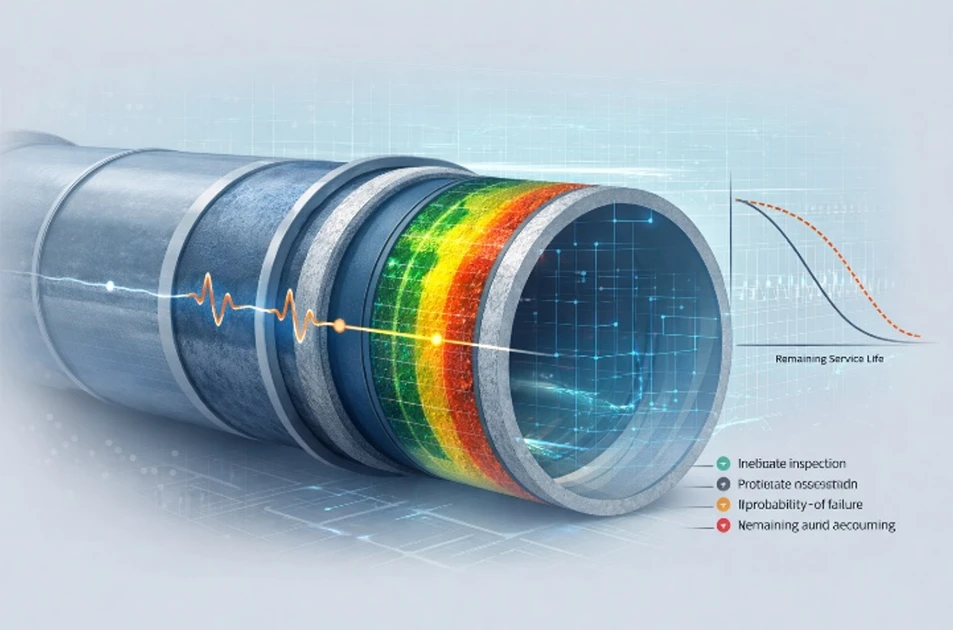
Since its founding, Gaia Assessment has established itself as a specialized engineering firm focused on interpreting advanced pipeline inspection data and converting complex sensor measurements into decision-ready engineering intelligence. Using physics-based structural models and reliability engineering principles, Gaia quantifies pipe structural capacity, identifies deterioration mechanisms, and evaluates failure risk to support defensible, risk-informed infrastructure decisions.
Gaia’s interpretation methodologies evaluate the structural performance of multi-layered pipeline systems by analyzing inspection-derived indicators such as composite stiffness, structural continuity, and degradation state. This enables direct quantification of structural condition, probability of failure, and remaining service life—providing infrastructure owners with clear, engineering-based guidance for operational planning, rehabilitation prioritization, and capital investment.
Gaia’s expertise spans all major pipe materials, diameters, and inspection technologies, supporting the structural assessment of critical water, wastewater, and industrial pipeline systems.
Key Technical Credentials
✔ 10,000+ km of pipeline inspection data interpreted and assessed, converting inspection signals into quantified structural condition and reliability metrics
✔ Specialized expertise across all major pipe materials: Steel, Ductile Iron (DI), Cast Iron (CI), PCCP, Bar-Wrapped Pipe (BWP), Plastic, and AC pipe
✔ Engineering-based quantification of structural condition, including effective stiffness, structural integrity, and degradation severity
✔ Advanced reliability modelling capability, including probability of failure estimation and remaining service life prediction
✔ Decision-ready engineering outputs, enabling utilities to prioritize rehabilitation, optimize capital planning, and reduce failure risk
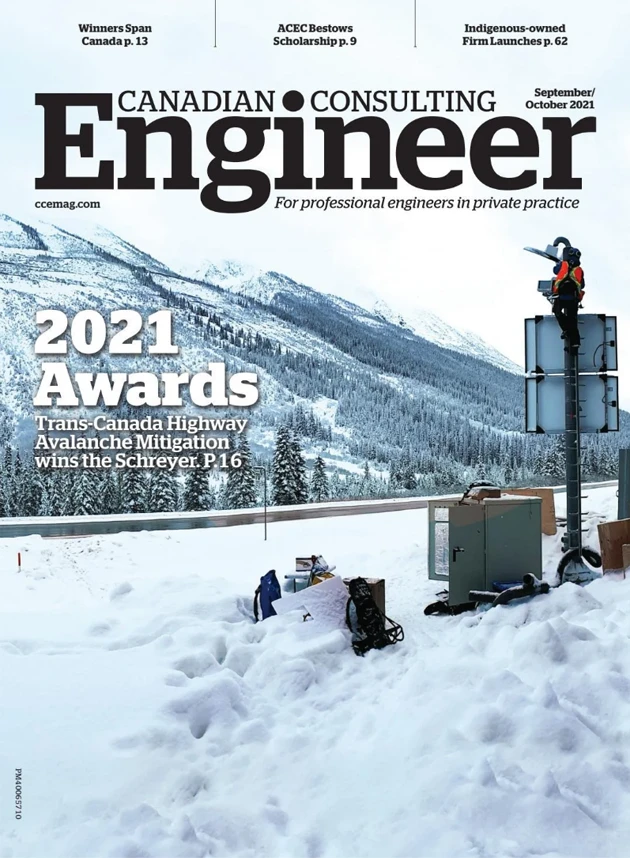
Gaia Assessment’s technical leadership is grounded in recognized engineering innovation and measurable industry impact.
In 2021, Rabia Mady, Founder and Principal Engineer, received the Award of Excellence from the Canadian Consulting Engineering Awards, one of the profession’s highest national honours.
The award recognized the development of an advanced structural condition assessment framework for carbon steel pipeline systems operating in constrained and complex environments, including bridge-mounted heating lines, utility corridors, and buried double-walled infrastructure.
This work established a defensible methodology for translating inspection data into quantified structural capacity and reliability metrics where conventional approaches were not feasible.
Significance of the Award
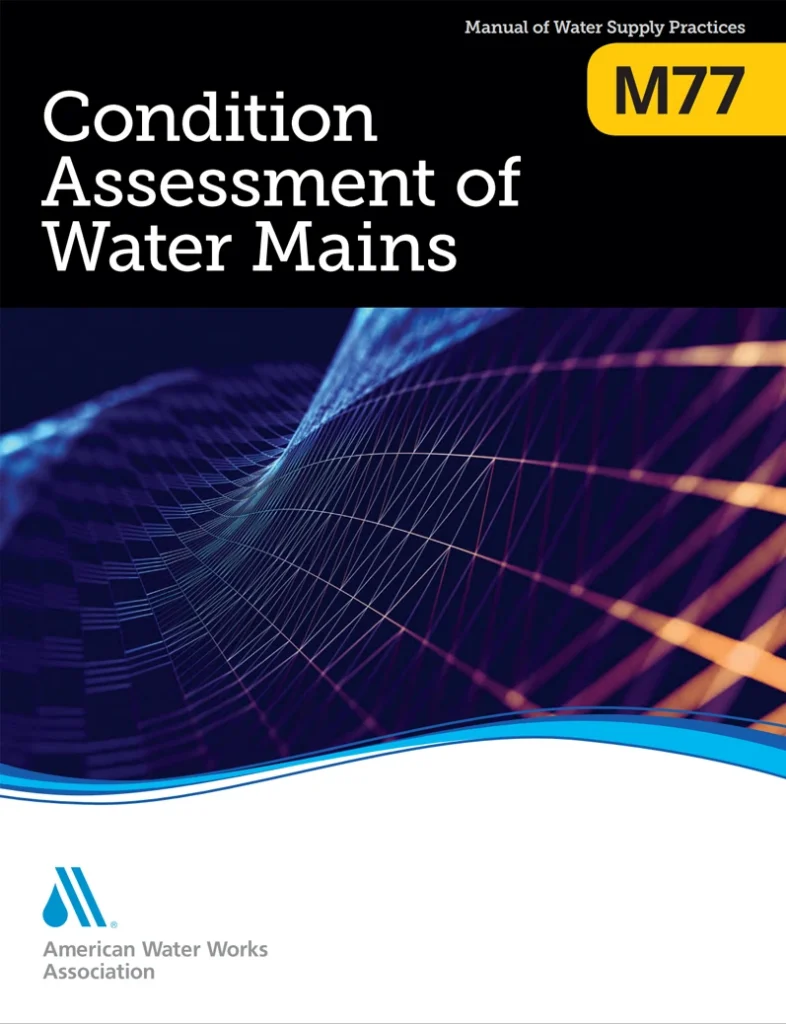
Gaia Assessment actively contributes to advancing industry standards and engineering best practices in pipeline condition assessment and integrity management. Since 2020, Rabia Mady, Founder and Principal Engineer of Gaia Assessment, has served as a contributing member of the American Water Works Association (AWWA) M77 Committee, responsible for the development and revision of the industry’s authoritative manual on water main condition assessment.
Rabia is currently serving as Lead Author for two chapters in the revised AWWA M77 Manual, focused on acoustic testing methodologies and prestressed concrete cylinder pipe (PCCP) condition assessment. These chapters establish engineering guidance for interpreting inspection data, evaluating structural integrity, and supporting reliability-based infrastructure decision-making.
The AWWA M77 Manual is globally recognized as the primary engineering reference for condition assessment of water transmission pipelines, and Gaia’s direct contribution to its development reflects leadership in advancing industry methodology and engineering practice.
Key Standards Contributions
✔ Active contributing member of the AWWA M77 Condition Assessment Committee since 2020
✔ Lead Author of revised manual chapters on acoustic testing and PCCP condition assessment
✔ Contributor to development of industry-standard methodologies for pipeline structural condition evaluation
✔ Advancement of reliability-based interpretation approaches for inspection-derived structural indicators
✔ Direct contribution to globally recognized engineering guidance used by utilities and infrastructure owners
✔ Leadership in shaping future industry standards for pipeline condition assessment

Gaia Assessment’s engineering methodologies are supported by published research and technical papers focused on advancing pipeline condition assessment, structural integrity evaluation, and reliability-based infrastructure decision-making. Through peer-reviewed publications, industry journals, and technical conferences, Rabia Mady, Founder and Principal Engineer of Gaia Assessment, has contributed to the development of advanced engineering frameworks for interpreting inspection data and quantifying pipeline structural condition.
These publications establish engineering methodologies for evaluating composite pipeline behaviour, estimating probability of failure, and predicting remaining service life using physics-based structural models and reliability analysis. This work supports infrastructure owners in transitioning from age-based assumptions to data-driven, reliability-based asset management strategies.
Comprehensive Assessment of Metallic Water Pipelines: Staged Approach Methodology for Enhanced Asset Management
Journal of Structural Design and Construction Practice, 2025
Developed a staged assessment methodology integrating inspection data, soil corrosivity analysis, ultrasonic thickness measurements, and Monte Carlo simulation to quantify structural condition and factor of safety for metallic pipelines.
Link: https://ascelibrary.org/doi/10.1061/JSDCCC.SCENG-1649
Innovative Approach to Estimate Prestressed Concrete Cylinder Pipe Remaining Useful Life
American Society of Civil Engineers (ASCE), 2024
Developed a methodology using survivor curve modelling and structural limit state analysis to estimate PCCP remaining useful life based on inspection-derived deterioration indicators.
Link: https://ascelibrary.org/doi/10.1061/9780784485583.037
Developing a Performance Curve for Bar-Wrapped Concrete Cylinder Pipe Based on Residual Factor of Safety Methodology
American Society of Civil Engineers (ASCE), 2023
Developed performance curves based on structural limit states and residual factor of safety to quantify BWCCP structural condition and support proactive asset management.
Link: https://ascelibrary.org/doi/10.1061/9780784485033.005
Developing a Survivor Curve for Prestressed Concrete Cylinder Pipe
American Society of Civil Engineers (ASCE), 2021
Established reliability-based survivor curves using composite structural analysis and limit state criteria to estimate PCCP probability of failure.
Link: https://ascelibrary.org/doi/10.1061/9780784483602.006
Prioritizing Pit Cast Iron Watermains Using Probabilistic Failure Models
American Society of Civil Engineers (ASCE), 2020
Developed probabilistic failure models using Weibull distribution to prioritize cast iron watermains for condition assessment.
Link: https://ascelibrary.org/doi/10.1061/9780784483206.012
Remaining Service Life Estimation for Pit Cast Iron Watermains
Environmental Science & Engineering Journal, 2019
Developed reliability-based methodologies to estimate remaining service life of deteriorated cast iron pipelines.